
Belt Conveyor for Coal Handling: The Arteries of Bulk Material Logistics
Release time:
Sep 03,2025
In the coal handling sector, belt conveyors serve as the fundamental infrastructure for continuous and efficient transport of bulk materials, linking unloading, storage, and loading processes with minimal operational interruption.
In the coal handling sector, belt conveyors serve as the fundamental infrastructure for continuous and efficient transport of bulk materials, linking unloading, storage, and loading processes with minimal operational interruption.
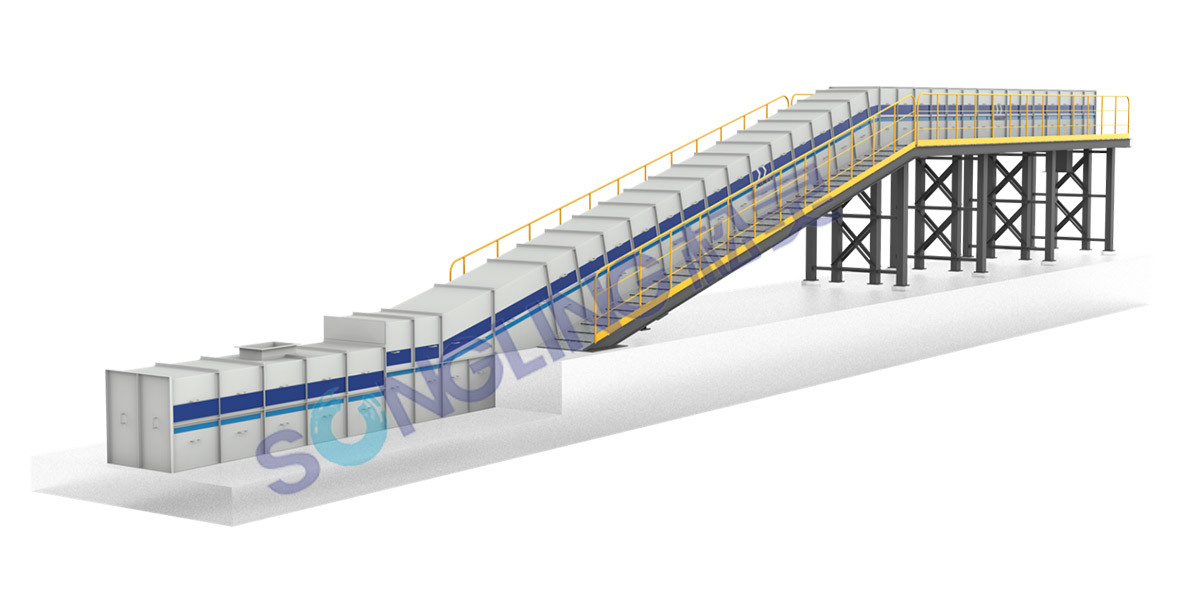
Core Function and System Integration
Belt conveyors designed for coal transfer are engineered to handle high-capacity, heavy-duty workloads over varying distances. Key components include reinforced rubber belts with wear-resistant covers, impact-resistant idlers, and powerful drive systems. Companies like Qingdao Songling integrate these systems with stackers, reclaimers, and shuttle conveyors to create fully coordinated material handling networks, ensuring seamless flow from mine to port or power plant.
Major Application Contexts
1. Thermal Power Plants
Used for transporting coal from storage yards to crushers and boiler bunkers, these conveyors must resist abrasion, dust, and environmental factors to maintain uninterrupted energy production.
2. Port Loading and Unloading
Critical in transferring coal between ships, stockpiles, and rail networks. High-capacity, long-distance conveyors optimize throughput and reduce vessel turnaround time.
3. Mining Operations
Employed underground and surface mines to move raw coal from extraction points to processing facilities or transport vehicles, often in demanding conditions.
Technical Evolution and Material Advances
Modern designs focus on eco-friendly and energy-saving features, such as enclosed structures to minimize dust emission and regenerative drive systems that reduce power consumption. Innovations in belt monitoring, like embedded sensors for tear detection and misalignment prevention, enhance operational safety and reduce downtime.
Operational Challenges
Despite their robustness, belt conveyors face issues like material spillage, belt wear, and environmental impacts from dust. Solutions include advanced sealing systems, impact beds, and automated cleaning devices to maintain efficiency and comply with environmental regulations.
Conclusion
As a backbone of coal logistics, belt conveyors evolve through integrated system design and smarter technologies, balancing reliability with sustainability demands in modern material handling ecosystems.
Related News
Share
Contact Us
No. 28 Liuzhou Road, Jiaozhou, Qingdao, Shandong, China

Material Cooling, Drying and Conveying Solutions


© Qingdao Songling Environmental Technology Co.,Ltd.